Signed in as:
filler@godaddy.com


From Revolutionary Battlefield to National Historic Landmark

William Livingston was born in Albany, New York, in 1723, into one of colonial America's most prominent families. He was the son of Philip Livingston, the second Lord of Livingston Manor, and Catharine Van Brugh Livingston, daughter of Albany Mayor Pieter Van Brugh.
He graduated from Yale College in 1741 and studied law under prominent attorney James Alexander before establishing himself as a lawyer, writer, and political figure.
William was one of a remarkable generation of Livingston siblings:
A committed advocate for American rights, Livingston became an important Patriot leader during the Revolutionary era.
As governor, Livingston remained a strong supporter of American independence while New Jersey was repeatedly threatened by British military operations.
In 1787, Livingston represented New Jersey at the Constitutional Convention in Philadelphia.
He was among the delegates who debated and shaped the new framework of government and ultimately became a signer of the United States Constitution.
William Livingston married Susannah French about 1745. Together they had 13 children, several of whom became prominent figures in the early American republic:
Several of the Livingston children died before their father, including two sons who died in infancy and Philip French Livingston and John Lawrence Livingston.
Livingston continued to serve as Governor of New Jersey until his death at Liberty Hall on July 25, 1790.
His career encompassed the roles of lawyer, writer, Patriot, military officer, Continental Congressman, governor, and Founding Father. As New Jersey's first governor and a signer of the Constitution, William Livingston occupies an important place in both the American Revolution and the creation of the United States.
Burial: William Livingston is buried at Green-Wood Cemetery in Brooklyn, alongside his wife, Susannah French Livingston, and other members of the Livingston family. A monument is being placed to commemorate William and Susannah and their contributions to the founding generation of the United States.
Susannah French Livingston was born in 1723 into the prominent French family of New Jersey and New York. Through her family connections, she was associated with several of the leading families of colonial America.
She married William Livingston (1723–1790), who became New Jersey's first governor and a signer of the U.S. Constitution. Together they raised a large family and became one of the prominent patriot families of Revolutionary-era New Jersey.
Susannah's patriotism extended beyond the traditional domestic role expected of women of her era. During the American Revolution, she actively supported the Continental Army through the organized efforts of the Ladies of Trenton.
In 1780, Susannah was identified as a member of the Essex County committee appointed to receive subscriptions for the relief of American soldiers. Her participation was part of a broader statewide effort by patriotic women to raise desperately needed financial assistance for the Continental Army.
The Ladies of Trenton transformed patriotic sentiment into direct material support for American soldiers, organizing fundraising campaigns throughout New Jersey at a particularly difficult point in the war. Susannah's documented participation demonstrates her personal contribution to the American cause.
Susannah and William Livingston had 13 children, including:
Through their children, the Livingstons became connected to numerous prominent families of the early American republic.
Susannah French Livingston died in 1789. Her life illustrates the important, though often overlooked, role women played in sustaining the Revolutionary cause. Through her participation in the Ladies of Trenton, she personally contributed to the financial support of American soldiers.
Burial: Susannah French Livingston is buried at Green-Wood Cemetery in Brooklyn, where she rests alongside members of her family. A monument is being placed to commemorate Susannah and her husband, William Livingston, recognizing their contributions to the founding generation of the United States.
Henry Brockholst Livingston was born in 1757, the son of William Livingston, New Jersey's first Governor and a signer of the U.S. Constitution, and Susannah French Livingston. He was a member of the prominent Livingston family, whose members played important roles in the political, military, and civic life of the American Revolution and early republic.
Livingston was well educated and entered public life during the Revolutionary era, ultimately combining military service with diplomacy and, later, a distinguished legal career.
Livingston served throughout the Revolution in both military and diplomatic capacities.
His Revolutionary War service included:
His combination of military and diplomatic service placed him in the midst of some of the Revolution's most important military and international affairs.he
After the Revolution, Livingston established himself as a prominent lawyer and public official in New York. His legal career eventually carried him to the highest court in the United States.
His public service included:
Livingston's career reflected the transition of the Revolutionary generation from military leadership to the creation and administration of the new American government and judicial system.
Henry Brockholst Livingston married three times:
Henry Brockholst Livingston died in New York City on March 18, 1823, at the age of 65. He was buried at Green-Wood Cemetery in Brooklyn, where his grave places him among numerous other Revolutionary War officers, patriots, and members of America's founding generation.
Robert Benson was born on October 30, 1739, in New York City, the eldest son of Robert Benson, Sr. (1715–1762) and Tryntje "Catherine" Van Bosum Benson. He was one of three brothers, along with Hendrickus ("Henry") Benson (1741–1823) and Egbert Benson (1746–1833). The Benson family was of Dutch ancestry and descended from some of the earliest settlers of New Amsterdam.
Although little is known about Robert's early education, he was clearly well educated. His younger brother Egbert attended the Collegiate Preparatory School operated by the Dutch Reformed Church before graduating from King's College (now Columbia University). It is believed that Robert and Henry received a similar education, including instruction in the Dutch language and Reformed Catechism.
The Benson family lived on Cherry Street in lower Manhattan before relocating to the corner of William Street and Maiden Lane in 1770. Following the British occupation of New York City in 1776, Robert went into exile while his widowed mother sought refuge in Dutchess County with his brother Egbert.
Robert Benson embraced the patriot cause early in the Revolutionary movement, becoming an active member of New York's leading revolutionary organizations.
He served in numerous patriotic and governmental roles, including:
These revolutionary committees included many of New York's leading patriots, among them John Jay, John Lamb, Hercules Mulligan, Alexander McDougall, Comfort Sands, and John Morin Scott.
There is also evidence that Benson may have briefly served as a First Lieutenant in the New York Militia under Capt. Peter Berton, before Berton declared his loyalty to the Crown.
In 1777, Benson was commissioned a Lieutenant Colonel in the Continental Army, serving for the remainder of the war as Aide-de-Camp and Military Secretary to Governor and Major General George Clinton. His duties placed him at the center of New York's military and political leadership, and much of his surviving correspondence documents communications with Continental officers and government officials on Governor Clinton's behalf.
On Evacuation Day, November 25, 1783, when General George Washington triumphantly reentered New York City after the British evacuation, Governor Clinton rode at Washington's right hand while Lt. Col. Robert Benson rode at Washiington's left—a fitting recognition of his years of faithful service.
Following the Revolution, Benson continued his career in public service, building upon the administrative experience he had gained during the war. His years as secretary, clerk, and military aide made him one of New York's most trusted public officials during the state's formative years.
The Benson family produced several distinguished patriots.
Lt. Col. Robert Benson played a vital but often overlooked role in the American Revolution. While others commanded troops on the battlefield, Benson helped guide New York's revolutionary government through its most difficult years, serving as a trusted secretary, military aide, and confidant to Governor George Clinton. His administrative leadership and dedication to the patriot cause made him one of New York's indispensable Revolutionary War statesmen.
Little is known about Henry Gibson's early life or parentage. He was born in 1751, probably in Orange or Ulster County, New York, and may have descended from one of the early Scottish or Scots-Irish families who settled the Hudson Valley. His surname occasionally appears in historical records as Gipson.
Although documentation of his youth is scarce, Gibson spent most of his life in Orange County, where he would later raise his family and become one of New York's longest-lived Revolutionary War veterans.
Henry Gibson enlisted in the Continental Army in May 1780 at Canterbury, New Hampshire, joining the 1st New Hampshire Regiment under Col. Joseph Cilley and Capt. Moody Dustin. He later served under Col. Henry Dearborn.
During the final years of the Revolution, Gibson served with the Continental Army in the Hudson Highlands, where large numbers of American troops were stationed at West Point, New Windsor Cantonment, and Newburgh.
His military service included:
According to his Revolutionary War pension testimony, Gibson enlisted in New Hampshire but spent much of his service with the Continental Army encamped in the Hudson Valley.
Following the war, Gibson returned to Orange County and married Phebe Brock on September 11, 1791, in Ulster County, New York.
The couple had at least four documented children:
Late in life, Gibson lived with his granddaughter Harriet, Benjamin's daughter, who appears with him in the 1850 United States Census when Henry was ninety-eight years old. Census records place him in Orange County continuously from 1800 through 1850.
Henry Gibson achieved distinction as one of the oldest surviving veterans of the American Revolution. On February 22, 1852, at 101 years of age, he traveled nearly 60 miles down the Hudson River to New York City to participate in George Washington's Birthday celebration.
The remarkable journey attracted widespread newspaper coverage, including reports in the Brooklyn Eagle. After returning home to Monroe, New York, Gibson died only a few weeks later on April 15, 1852, at the age of 101.
Following his death, Gibson's remains were brought to New York City by United States veterans, where they lay in state before being escorted to Green-Wood Cemetery in Brooklyn.
His funeral became one of the largest public tributes ever held for a Revolutionary War veteran in New York.
Henry Gibson was laid to rest with full military honors at Green-Wood Cemetery. Of the more than sixty Revolutionary War veterans and patriots buried there, only Henry Gibson and David Davis (1754–1858), 1st New York Regiment, lived to be over one hundred years of age.
Henry Gibson's extraordinary longevity made him a living link to the American Revolution. His appearance at New York City's Washington's Birthday celebration in 1852 captured the imagination of the public, and his funeral drew thousands who gathered to honor one of the last surviving soldiers of the War for Independence. Today, he remains one of Green-Wood Cemetery's most remarkable Revolutionary War veterans.
John Greenwood was born on May 17, 1760, in Boston, Massachusetts, the son of Dr. Isaac Greenwood, Jr. (1730–1803) and Mary Jans Greenwood (1726–1820). His father was a skilled dentist, artisan, ivory carver, and maker of mathematical and scientific instruments, producing instruments for Benjamin Franklin.
As a young boy, Greenwood witnessed many of the events that fueled the American Revolution. At just ten years old, he was deeply affected by the Boston Massacre of March 5, 1770. One of those killed, Samuel Maverick, had been his father's apprentice and lived in the Greenwood household, making the tragedy deeply personal.
In 1773, at age thirteen, Greenwood was sent to apprentice with his uncle John, a cabinetmaker in Falmouth (now Portland, Maine). Before leaving Boston, he witnessed both the Boston Tea Party and the public tarring and feathering of British officials. During this period, he discovered a discarded fife, repaired it himself, and taught himself to play by imitating British military musicians marching through Boston's streets.
When news of the Battles of Lexington and Concord reached Maine in 1775, Greenwood immediately returned to Boston. Carrying a sword on his back and his fife in hand, the fifteen-year-old walked more than 100 miles, supporting himself by playing music in taverns and town squares along the way.
On May 3, 1775, he enlisted in the 26th Massachusetts Regiment (later redesignated the 15th Continental Regiment) under Col. John Paterson in Capt. Theodore Bliss's Company. His musical talent earned him promotion to Fife Major.
During his Continental Army service, Greenwood:
In 1778, he returned to military service for three months with the Massachusetts Militia, serving under Gen. William Heath in Lt. Col. Symmes' detachment of guards.
After leaving the Continental Army, Greenwood spent two years as a cod fisherman before joining the growing fleet of American privateers, often called "Washington's Navy."
His wartime maritime service was filled with adventure and danger.
While assisting British carpenters repairing the captured vessel, Greenwood escaped after arriving in occupied New York City. Blending into the waterfront crowds, he fled with the ship's quadrant, later selling the valuable navigational instrument after being exchanged through British Prisoner Commissary David Sproat. Returning safely to Boston, he completed the war serving aboard the privateers Aurora and Resolution.
Following the Revolution, Greenwood settled in New York City, where he first worked as a wood turner, merchant, and maker of mathematical instruments before entering the dental profession.
Although largely self-taught, he drew upon skills learned from his father in ivory carving and instrument making to become one of America's foremost early dentists.
His accomplishments included:
By 1800, Greenwood was widely regarded as the finest dentist practicing in New York City.
John Greenwood married Elizabeth Weaver (1764–1831) on November 13, 1793, at New York City's Brick Presbyterian Church, officiated by Rev. Dr. John Rodgers.
Elizabeth was the daughter of William Weaver, who was wounded by cannon fire from HMS Asia during the 1775 capture of British artillery at Battery Park by Alexander Hamilton, Hercules Mulligan, and the Hearts of Oak Militia.
Together they had four children who survived to adulthood:
His brothers, William Pitt Greenwood, also a dentist, and Clark Greenwood, a mechanic, later became his business partners.
The family home and dental office stood at 11–13 Park Row, near the present-day southern end of City Hall Park.
Dr. John Greenwood died on November 16, 1819, at the age of 59, from complications following a stroke.
He was originally buried in the Brick Presbyterian Churchyard before being reinterred in the New York Marble Cemetery in 1856. His remains were later moved to Green-Wood Cemetery, where he rests beside his wife, Elizabeth.
Dr. John Greenwood's life embodied the spirit of the American Revolution. As a teenage soldier, fife major, and daring privateer, he served his country both on land and at sea. In peacetime, he became one of America's pioneering dentists, earning a national reputation for his craftsmanship and innovation. Remembered as George Washington's dentist and an early inventor of the mechanical dental drill, Greenwood left a lasting legacy in both American military history and the history of dentistry.
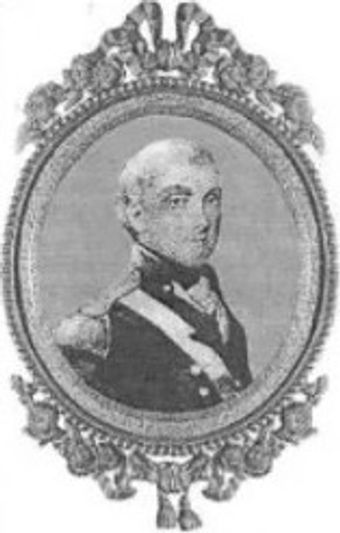
Bezaleel Howe was born on November 28, 1750, in Marlborough, Middlesex County, Massachusetts, the son of Bezaleel Howe, Sr. (1717–1751) and Ann Foster Howe (1715–1790). He was the sixth of their children and descended from some of New England's earliest "Great Migration" families.
His father, a cordwainer (shoemaker), died when Bezaleel was still an infant. In 1766, his widowed mother relocated to Hillsborough, New Hampshire, with her daughter Edith Bradford and sixteen-year-old Bezaleel. He spent his formative years there as tensions between Great Britain and the American colonies steadily increased.
The day after the Battles of Lexington and Concord, April 20, 1775, Howe enlisted as a Private in Col. George Reid's 1st New Hampshire Regiment, serving in Capt. Frohly's Company under Brig. Gen. John Sullivan. The regiment marched immediately to Cambridge, participated in the Siege of Boston, and fought at the Battle of Bunker Hill.
On January 1, 1776, the regiment became the 5th Continental Regiment and joined the ill-fated Canadian Campaign, fighting at the Battle of Trois-Rivières (Trois-Rivières, Quebec). Returning south, Howe fought with the main Continental Army at the Battles of Trenton and Princeton, serving under Col. John Stark.
His military career continued to advance during the remainder of the Revolution.
Howe's Revolutionary War pension records provide a detailed firsthand account of his distinguished military career, including his service with Washington's Life Guard during the final months of the war.
His family's commitment to independence was equally remarkable. All of his brothers served in the Revolutionary War:
Following the Revolution, Howe continued his military career in the newly established United States Army, serving an additional nine years on the nation's western frontier.
His post-war military service included:
Following his retirement from the Army, Howe briefly pursued business opportunities in New Orleans before returning to New York City.
He later accepted a position with the United States Customs House, where he remained in federal service until his death. Howe was also an active member of the Society of the Cincinnati, preserving the fellowship and memory of Continental Army officers.
Major Howe married Hannah Merritt (1748–1798) of Mamaroneck, New York, on September 16, 1789. They had one daughter:
Hannah died during New York City's Yellow Fever epidemic of 1798.
On February 15, 1800, Howe married Catherine Moffat (1774–1849). Together they had eight or nine children, including:
Major Bezaleel Howe died on September 3, 1825, at his home on Mott Street in lower Manhattan.
He was originally buried in the Dutch Reformed Churchyard on Houston Street. In 1875, his remains were reinterred in Green-Wood Cemetery, where he rests beside his wife Catherine and two of their sons, George and Bezaleel, Jr.
Major Bezaleel Howe devoted more than twenty years of military service to the United States, serving with distinction in both the Continental Army and the United States Army. Rising from the ranks as a private to the rank of major, he fought in many of the Revolution's most important campaigns, served in General Washington's elite Commander-in-Chief's Life Guard, and later helped establish the professional U.S. Army during the Northwest Indian War. His career represents a remarkable bridge between the War for Independence and the nation's first standing army.
Henry Rutgers was born Hendrick Rutgers, Jr., on October 7, 1745, in New York City, the seventh child of Hendrick Rutgers, Sr., and Catharina DePeyster Rutgers. He was baptized at the New Dutch Church on Nassau Street. His maternal grandfather, Johannes DePeyster, served as the 23rd Mayor of New York City.
The Rutgers family descended from early Dutch settlers who arrived in New Amsterdam during the mid-1600s. They established a successful brewery and owned extensive farmland throughout what are now Chinatown and the Lower East Side of Manhattan. Henry inherited a portion of the family estate and became actively involved in managing the family's business interests.
In 1763, Rutgers entered King's College (now Columbia University), graduating in 1766. During this period, he adopted the Anglicized form of his name, Henry, and became acquainted with leading New York patriots including, Alexander McDougall, John Lamb, Isaac Sears, and other members of the Sons of Liberty, who influenced his growing support for American independence.
When the American Revolution began, Rutgers entered military service in defense of the patriot cause.
In 1776, he was commissioned a Lieutenant in Colonel William Malcolm's 2nd Regiment of New York Levies. During the Battle of Brooklyn (Long Island), his regiment served with Brig. Gen. John Morin Scott's New York Militia Brigade. The battle brought personal tragedy when his younger brother, Harmanus Rutgers (1749–1776), was killed in action on August 27, 1776.
Rutgers continued to serve with distinction throughout the war, advancing through several important staff and command positions.
His Revolutionary War service included:
Following Baron von Steuben's reorganization of the Continental Army, Rutgers' position as Deputy Commissary of Musters was eliminated, but he continued to serve New York until the close of the war.
After the British evacuation of New York in 1783, Rutgers returned to find his family's estate badly damaged. During the British occupation, the property had been confiscated and used as military quarters and a hospital, forcing his elderly parents and other family members into exile in Albany.
Rutgers resumed management of the family estate while continuing his public service.
His post-war contributions included:
Among his greatest philanthropic achievements was his generous financial support of Queen's College in New Brunswick, New Jersey. In recognition of his extraordinary generosity, the college was renamed Rutgers College in 1825, today known worldwide as Rutgers University.
Henry Rutgers never married and had no children.
He devoted his life to public service, philanthropy, and the advancement of education and religious institutions. His generosity made him one of the most respected civic leaders in early nineteenth-century New York.
Colonel Henry Rutgers died on February 17, 1830, at the age of 84.
He was originally buried at the New Dutch Church on Nassau Street. As Manhattan became increasingly urbanized, his remains were reinterred at the Middle Dutch Church in 1858, and later moved to Green-Wood Cemetery in 1865.
Over time, the exact location of his grave was lost, and many believed he had been buried in New Jersey. In 2007, historian Jeffrey Richman and Green-Wood Cemetery volunteers rediscovered his long-forgotten burial site while researching Civil War veterans. The grave was subsequently marked with a commemorative military plaque through the efforts of the Rutgers University community.
Colonel Henry Rutgers is remembered not only for his distinguished Revolutionary War service, but also for a lifetime devoted to public service, charity, and education. A trusted Continental Army officer and New York militia commander, he later became one of New York City's foremost philanthropists. His enduring legacy lives on through Rutgers University, which proudly bears his name, and through his lasting contributions to the civic, religious, and educational life of the young American republic.
Joshua Sands was born on October 12, 1757, at Cow Neck (later known as Sands Point) in Queens County, New York (now Nassau County). He was the youngest son and seventh child of John Sands III and Elizabeth Cornell Sands.
The Sands family descended from early English settlers who migrated from Block Island, Rhode Island, to Cow Neck in 1691, when Joshua's great-grandfather, John Sands I, acquired a large tract of land along Long Island's north shore. Over the next several generations, the Sands family became one of the region's most prominent and influential families.
By 1775, Joshua was employed as a merchant's clerk in the New York business of his older brother Comfort Sands, whose patriotic activities greatly influenced the young Joshua.
Nearly all of Joshua's older brothers supported the American cause:
Growing up in such a patriotic family helped shape Joshua's lifelong commitment to the cause of American independence.
In 1776, Joshua Sands was commissioned a Captain and assigned to the staff of Colonel Joseph Trumbull, the Commissary General of the Continental Army.
Although holding a military commission, Sands' greatest contribution came through supplying Washington's army with desperately needed food, clothing, equipment, and military stores. Contemporary records document Joshua and his brothers assisting the Continental Army during its retreat following the Battle of Brooklyn.
His Revolutionary War service included:
Throughout the Revolution, the Sands family became one of the principal merchant families responsible for supplying the Continental Army, making an indispensable contribution to the Patriot cause.
Following the war, Joshua Sands became one of Brooklyn's leading businessmen, landowners, and public officials.
In 1784, he purchased the confiscated estate of Loyalist John Rapalje, a 160-acre tract along the East River in what is now the DUMBO neighborhood of Brooklyn, near the Brooklyn Navy Yard. He built an impressive mansion on Front Street, and the neighborhood's Sands Street still bears his family name.
His post-war accomplishments included:
Throughout his life, Sands remained active in Brooklyn's civic, commercial, and political affairs, helping transform the growing community into one of America's leading cities.
Joshua Sands married Anne Ayscough (1761–1851) on March 9, 1780, at the home of Colonel William Malcolm in Wallkill, Ulster County, New York. The ceremony was performed by Rev. John Moffat.
Anne was the daughter of Dr. Richard Ayscough, a British Army surgeon and major, and Ann Langdon. During the Revolution, Joshua and Anne lived primarily in Rhinebeck, Dutchess County, while in exile from British-occupied New York City.
Together they had at least eleven children.
Among their notable descendants:
Captain Joshua Sands died in Brooklyn, New York, on September 13, 1835, at the age of 77.
He was initially buried at St. Paul's Church in Eastchester (present-day Bronx). His remains were later reinterred at Green-Wood Cemetery, where he rests among many other distinguished Revolutionary War patriots.
Captain Joshua Sands combined military service, patriotic sacrifice, commercial success, and public leadership into a remarkable career spanning more than half a century. During the Revolution, he helped sustain the Continental Army through his work in military logistics and supply. In peacetime, he became one of Brooklyn's foremost civic leaders, a founder of the Bank of New York, a state senator, congressman, judge, and respected merchant. His family's name remains permanently woven into the history of both New York City and the American Revolution.
Ebenezer Stevens was born in Roxbury, Province of Massachusetts Bay, in August 1751 (sources list August 11, 12, 21, or 22). He was the son of Ebenezer Stevens (1726–1763) and Elizabeth Weld Stevens (b. 1727), and descended from his great-grandfather Erasmus Stevens, who appears in Boston tax records in 1674. As a young man, he trained as an artillerist in Adino Paddock’s Boston militia unit, serving alongside notable patriots such as Paul Revere.
Stevens was active in the earliest patriotic protests and in military service during the Revolution. He participated in the Boston Tea Party (16 December 1773), patrolling the docks and helping dispose of taxed tea (family accounts note participants did not disguise themselves as Mohawks). After the Tea Party, he fled to Rhode Island.
Following the outbreak of hostilities, Stevens joined the Continental Army and fought at Bunker Hill (1775). Commissioned as a lieutenant under Henry Knox, he rose rapidly through the artillery ranks and took part in major northern campaigns:
After the Revolution, Stevens transitioned to state militia leadership and civic defense:
Stevens became a successful merchant and shipowner, building a significant importing and shipping business from Manhattan. He engaged in civic and social organizations and correspondence at high levels: